|
Australian Couples Counsellor Ghita Andersen talks about an easy way to think of interactions in your relationship or marriage. Based on Health Psychology and The Gottman Method of 'Leaning Towards', consider whether the interaction is healthy or unhealthy for your relationship: Does it fill or empty your Marriage Jar?
More information on Couples Counselling/ Therapy please see Ghita's website pages: https://www.ghitaandersen.com/couples-counselling.html Ghita's Blog 2024
0 Comments
 I love this story...
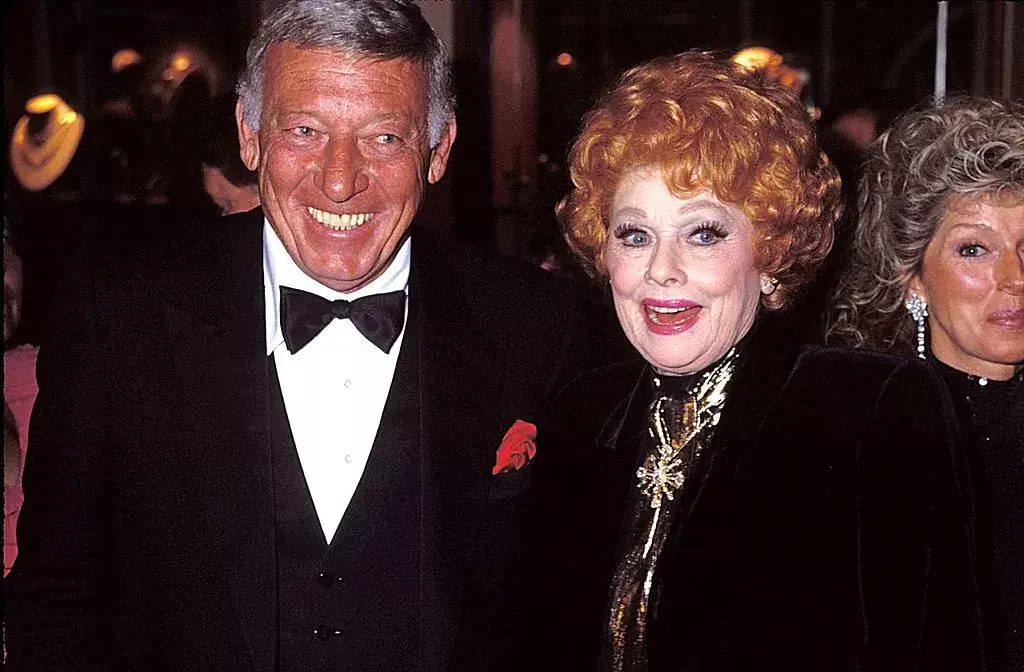
December 19 and 20 were important days for Lucille Ball and Gary Morton. The 19th was Gary's birthday and the two had their first date on December 20, 1960. Lucy later told journalist Gladys Hall: "Gary is, by nature, a happy person. He lifts - and the lady known as Lucy was, at that time, woefully in need of a lift...His is the natural humor of one who loves to laugh and wants the world to laugh with him. That makes two of us. I always wanted to make people laugh and I have always loved, and wanted to be with, people who laugh. That evening, I laughed with Gary and when the evening ended and he took me home, I was in better spirits and felt more like ME than I had done in many months. The following day, December 21 (I have a mind like an IBM machine for dates) Gary took off to play a two-week engagement in some hamlet in Ohio... While Gary was away he called me on the phone, or wired me, every day and when he got back to New York he continued to call every day. He also - after asking my permission to do so - called for me at the theatre every evening after the show and took me home, or, if I felt up to it, somewhere for supper. As a date, Gary was quiet and relaxed, comfortable to be with, sort of cozy yet gay as all get out, sweet and attentive, but no demands - all play it by ear, easy does it, day by day - until the day (2 months after we first met) when striking a serious note for the first time but trying to give it the light touch, he asked, 'Would you like to go steady with me, be my girl?' To this question, naively put, my instantaneous reaction was: 'Oh, no I don't think so. I'm not ready yet.' When I fell in love with Desi, it was at first sight - wham, bang and away we go! - whereas my love for Gary was slow growth, with its roots in the faith that, just by being his sweet and steadfast self, he built in me. I liked him before I loved him and this is good, this is the way it should be, if love is to outlast the roses and rapture period and develop into a relationship based on a firm foundation of shared interests, mutual confidence and the ability to communicate, one with the other." Lucy and Gary remained married for the rest of Lucy's life xx Ghita www.ghitaandersen.com/ghitasblog https://www.instagram.com/p/C1HFJ4LpG4T/ 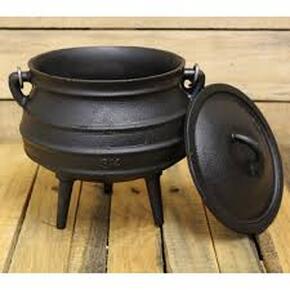 Self-esteem is the ability to value oneself and to treat oneself with dignity, love, and reality.
Here is an awesome story about a pot by Virginia Satir (Family Therapist): When I was a little girl, I lived on a farm in Wisconsin. On the back porch was a huge black iron pot with rounded sides, standing on 3 legs. My mother used it to make soap. When farm workers came for harvest, it was filled with stew. At other times, my father used it to carry manure for the garden. We called it the 3 'S' pot: (Soap, Stew, Shit 😄) Anyone who wanted to use it had to ask the questions: What is the pot full of? And how full is it? So now, when working with people, I ask them about their pot. (Self-worth). As with my old family pot, the questions are: Is my self-worth negative or positive at this point, and how much of it is there? Integrity, honesty, responsibility, compassion, and competence flow from a person with a pot full of good stuff. Mistrust, victimhood, loneliness, isolation, fear, defeat, addictions, worthlessness, and defensiveness come from low pot feelings. But feeling low is not the same as having a low pot. A person with high self-esteem can have a bad day. A low pot will often make people behave as if those undesirable feelings did not exist. It takes high self-worth to acknowledge those feelings. ( A great metaphor to use when talking about feelings with someone who is uncomfortable talking about feelings. Yes? ) Xx Ghita www.ghitaandersen.com Instagram: GhitaTherapy https://www.instagram.com/p/C1V4mgcp3_r/  Client A was from Japan. My client was a typical looking Japanese woman in her early thirties – divorced, and mother of one child. She had a small build, around 5’4, a pleasant face and black hair. Her English was a little troublesome, but very good for the time she had been in Australia. My client had tried hypnosis before with success, but wanted to try past-life regression to answer some lingering questions in this life. She was a firm believer in reincarnation.
I took my client a back in time (19th century) to a rural town in Australia. This town was cattle country with big hats, even bigger cows, ranchers and dusty roads. They lived in a fairly big town in a large Queenslander style home. We did not go into the exact location, but it was inland from the east coast. In this lifetime, client A was a young girl of around 17 or 18. My client saw herself as a pretty girl with golden curls and lacy dresses (Quite different to how she looked currently). She had a lot of beautiful things and adored her silver hair brushes. Her father was a gruff man who paid her little attention. He was tough and exercised his authority often. She was closer to her mother who was kinder to her. Her parents wanted her to marry, and had found a suiter in the form of an older man (cattle farmer) of good standing. She did not want to marry this man, but there were few options for a young girl in those days. It was marriage or work – and young girls from good families did not work; they were expected to serve a husband. Furthermore, my client was already in love with a ranch hand. They were not a match from a social class point of view. My client had given her lover her innocence already in a hay-shed. She was devastated that he was not going to fight for her hand, but she understood. While they loved each other, the repercussions for him work-wise if he went to her father, would probably be ruinous. The outcome was that they both married other people. She saw him once more - amongst the crowd in town, with his family. He seemed to be happy. On the flip side, she was never happy. She was depressed in her marriage and wanted to die. She never learned to love her husband. It was not a good match and he was a lot like her father. What Were the Lessons From This Life? The lesson was that women did not have much say in their destinies. Life choices were very limited. When she was to reincarnate, she must empower herself in every way that she could: With education, choices in partners, or even marriage or no marriage? My client could choose how she lived her life. She did not have to follow a man in his destiny, she could create her own and choose the type of man that she desired. A man could not make her happy. She would have to do that. But the right man could add to her happiness. Looking into the Future: I took my client further onto her time line in this lifetime to see what her future held. My client went into the future by five years. She had taken some time out (post-divorce) to concentrate on re-educating herself, rather than seeking out a new partner. The woman that she would become had more self-esteem, due to solidifying her worth - based on choices that were good for her and achievement based confidence from studying hard. She was a good mother too and enjoyed her freedom and quality time with her son. She was on good terms with her ex-husband (despite the domestic violence that had occurred during the marriage) and had time for herself. She believes that her husband in the past life was also her ex husband in this life. My client said she felt better in her own skin and had developed a core group of friends. She had become more sociable and felt strong and in control of her life. At this time, she was about to meet her handsome soul-mate of a ranch hand – who would again be Australian. This time they would have no social interference or judgement about being together. Funnily enough, in this lifetime he would be a ranch-hand/ farmer with a small house and acreage of his own. In fact, they would live together in his house and grow fruit and vegetables. They would live a simple life together, but be blissfully happy. She could see herself looking very content – absolutely blossoming in this environment. She saw herself riding horses with her partner and working with horses. This is not part of her life currently and very different from her upbringing in Japan. Answers About the Synchronicity of Both Lives: Discovering the details of the past and future lives gave my client some comfort and answers. It solved the major question about why she was drawn to Australia in the first place and why she choose to study here – where she met her first husband. It also satisfied her belief that she couldn’t stay in that marriage. Moreover, it resolved why she did not want to go back to Japan - despite feeling a bit isolated (socially) in Australia. It also soothed her mind, about becoming more selfish in her choices surrounding education, motherhood and uncoupling the marriage. It eased the guilt regarding the break-up. She understood that in order to enjoy her life fully in this time line, she had to learn the lessons of having few choices as a woman in the last. She had to honour the woman that she was then by taking every opportunity that came her way in this lifetime. And do it without guilt. My client was extremely happy with her session. It all seemed to put the jig-saw pieces together for her and I felt honoured to help her. https://www.ghitaandersen.com/ghitas-blog https://www.ghitaandersen.com/past-life-hypnotherapy.html A collection of case stories is being written for a book about Past-Life Regression Case Stories and Reincarnation in the future: Author Ghita Andersen Copyright Ghita Andersen November 2023. All Rights Reserved. #Past-Life-Regression #Stories-of-Reincarnation #ghitaandersen #reincarnation #evidence-of-past-lives #ghitatherapy 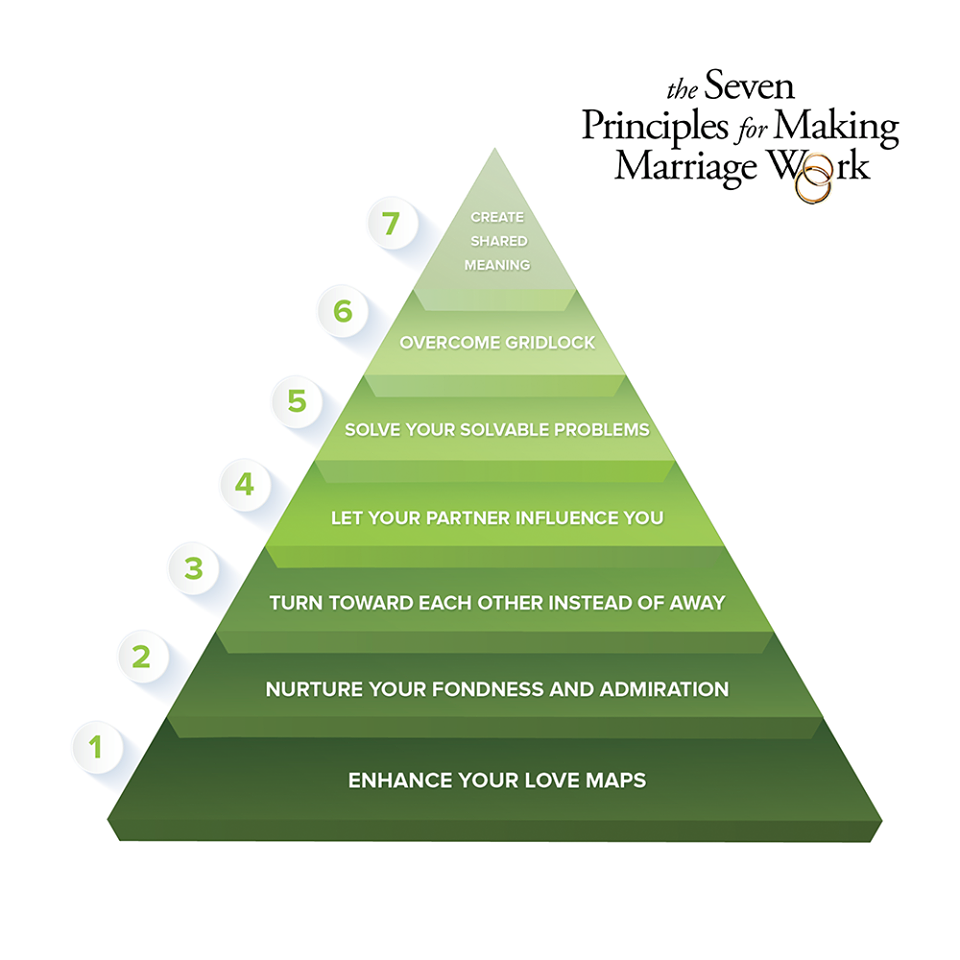 Image from The Gottman Book ' 7 Principles...': Copyright John and Julie Gottman In a lab study, for example, we were able to predict with 94% accuracy whether a marriage would last — after observing the couples for just 15 minutes. One of the biggest determining factors was how often a couple “turned toward” their partner instead of “turning away.” CNBC - 11 Nov 2022 (Gottman Method)
After a decade as a Couples Therapist, I believe that the number one determining factor as to whether your relationship will last or not comes down to ACCEPTANCE and RESPECT. This is demonstrated by you both in the amount of times you turn towards, listen to each other’s opinions and advice and are fully present with each other. The baseline of any romantic pairing is LOVE. But often that love is not unconditional. In fact, it is because that person we are partnered with offers us things we need and traits we do not have ourselves. ‘Completing us” if you will. We fall in love with an image of who they are, but this may not be who they are. Also, we can emphasize the good when we are first in a love bubble and ignore really big red flags! Which is why, it is so vital to know who you are together with, before you move in – and like and accept who they are. This compatibility is paramount. In Gottman Couples Counselling, this is known as Love Maps. Learning all about your partner so that you know how what they like, what is important to them, where their vulnerabilities are and to make them feel special, safe, protected, heard and respected. A great way to learn more about your partner is with a Pre-Marriage Contract. This is a list of things that you agree on for moving forward with your relationship towards co-habitation or marriage. It is very popular in the United States. I run a 3 hour workshop for couples who are planning to move in together or get married. This contract or list can go on the inside of a cupboard door and be used by both parties to constantly negotiate. It reduces conflict by about 44% according to statistics from the US. Love and attraction is just the baseline folks. You have to have the acceptance, respect and will to maintain your relationship. Turn towards often. To use a metaphor, a relationship is not unlike a plant. Are you watering yours and giving it sunlight? Ghita www.ghitaandersen.com Ghitas' Blog August 2023 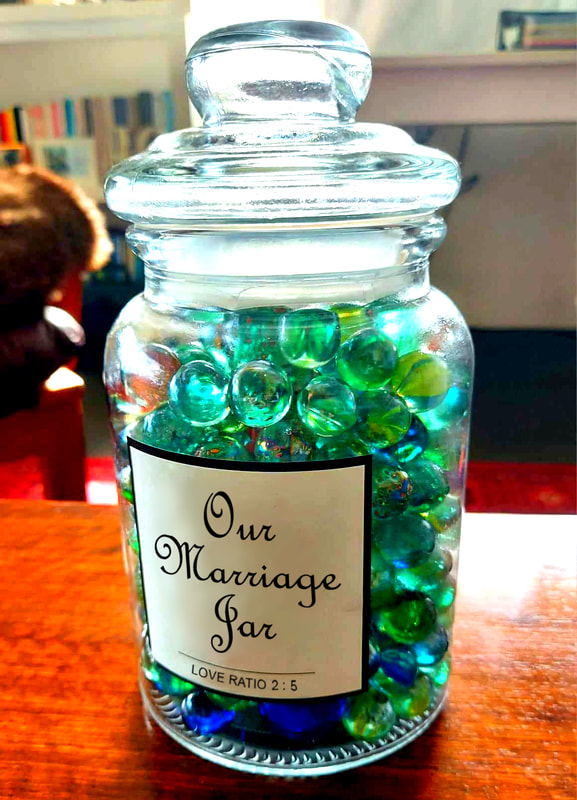 The 'Marriage Jar' is a simple concept and it is amazing how this simple idea can adjust one's behaviour every day. Basically, it works like this: When you are first together, the metaphorical love jar is full. As time goes by, the jar empties. For every kind gesture, kiss, supportive comment, intimate moment, etcetera, two marbles go in. For every sarcastic remark, episode of not listening or avoidance of connection, five marbles come out.
At Ghita Therapy we have a real “Marriage Jar” for sale to remind you about the importance of your interactions. Why? Because couples are always asking if they can buy the one in the therapy room! The marriage jar needs to be replenished regularly. It should be cherished and fed daily so that it overflows and is not in deficit. This jar, placed somewhere very prominent (like the kitchen, lounge or bedroom), will remind you on a subliminal basis to make sure that your positive interactions far outweight your negative one's. It is a physical manifestation of the 5:2 ratio. It will keep your marriage communication on track inbetween therapy top-up sessions; just like happy photos of you in your home remind you of the love and intimate moments you share. *Freight not included $30 each Pick up jars from Ghita Therapy (Currumbin) by arrangement Video on Marriage Jars: https://youtu.be/ohjPiP8iL_M 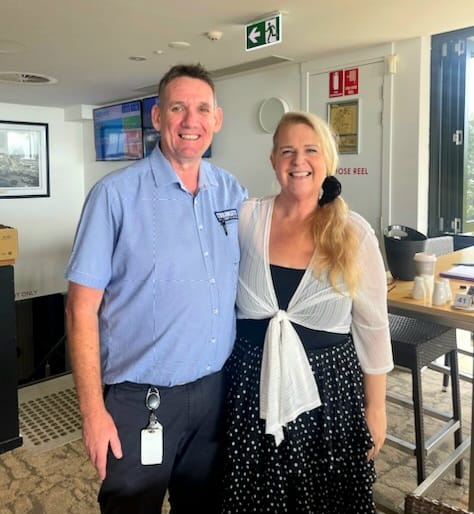 Tuesday, 13th June 2023:
A big thanks to Coolangatta Surf Club (seen here with Manager Steve) for letting me talk to staff about the importance of mental health balance. This club was crazy busy over the Cooly Rocks festival recently, and as you know, hospitality is a stressful industry. The Coolangatta Surf Lifesaving Club club offers their staff up to three counselling sessions if they need it. And the feedback from staff to me has been awesome. Ghita Therapy is the designated counselling service for Gold Coast Surf Clubs at Coolangatta and Palm Beach. This amazing 'mental health first-aid' concept by Cooly Management for Gold Coast Surf Clubs will no doubt go viral and spread to RSL and sports clubs, too. CSLS club also offer their staff gym joining fees to keep staff stress levels down. When a lot of companies are removing their HR departments and employees are feeling workplaces are becoming less humanistic, this team are working on keeping their staff as happy as possible. Bravo! xx Ghita Andersen www.ghitaandersen.com #coolangattasurflifesavingclub #ghitatherapy #surflifesaving #mentalhealth #counselling #goldcoast  Getting what you want in your relationship should not be a win-lose proposition. Ideally, we should want to make our partners happy. We should want to feel like a team. A bonded union. Otherwise, why be in a relationship?
But so often couples fall into divisive patterns, especially after children come along and things get harder. Suddenly one person’s freedoms get questioned and another feels that they carry too much responsibility. “Why are you allowed to go surfing on Saturdays and I have to watch the kids? When do I get to do what I want?” The competition kicks in. The score-keeping. Partner’s feel resentful. The honeymoon or Bonding period is over. Words like ‘selfish’ are thrown around. Cold shoulders, silence and stonewalling follow. So often couples forget to negotiate their needs and say them with soft, neutral delivery. They forget to say, “I feel…. I think this about… "They use generalisations and exaggeration phrases like ”You never... you always... you should....” The word ‘you’ at the start of a sentence is blaming and creates conflict. Partners retreat, defend or avoid conflict. Intimacy suffers when partners withdraw emotionally. The couple are no longer bonding, but differentiating or feeling separate. A person needs to feel that they are not the problem. Even though, their behaviour sometimes is. It is hard to have empathy though when you are constantly defending yourself. When we talk in ‘I’ phrases, the experience we are talking about is our experience of our partner’s behaviour. It is not a direct attack. It is not a character assassination. It may or may not be true or real. It may be one perspective. We may have gotten things wrong. When we start a dialogue with ‘you’ it is an attack on our partner’s character and often comes with finger waving. So much better to think… “He/ She is telling me about their experience of me. They aren’t talking ABOUT ME!” It is easier to listen and to go into problem solving mode when one’s fight or flight response has not gone off! Yes, we want to understand. We want to give them the benefit of the doubt. We want to be loving and hopeful. If we get sensitive and take things personally our danger signal will go off and we will be flooded with emotion - often anger or a sense of injustice. We will be in the reptilian brain mode ready for a fight, instead of the frontal lobe ready to think laterally, creatively and calmly. One is mature and geared for solutions and one is immature and geared for bear wrestling. We all have needs. Having needs does not mean betraying the partnership. We are the people that our partners were attracted to. We still have individual friends, hobbies, family, sports etc. Family life just means trying to fit it all in. Ultimately, we have no choice but to do deals. It is not a good idea to insist that our partners change. Resentment often develops when we do not lay down our boundaries with assertiveness. If we feel like the doormat, it is because we have given too much. Taken on too many chores. We feel hard done by. Yet, no one made us. In fact, the person we should be mad at is often ourselves. Our partners are not mind readers and we often project our own feelings or motivations onto them. Couples Counselling can teach you to negotiate, lay down your boundaries and accept that relationships are give and take. There are great skills and strategies to be learnt to create wonderful, symbiotic relationships that last. And your friends will be asking you how you do it. Methods I use:
Text me for a 10 minute call-back on 0439888070. Ghita Andersen Ghita’s Blog April 2023 www.ghitaandersen.com  Exercise for Couples Counselling Individual Sessions (Part 2 of 3 Step Package)
In the individual sessions, we look at how the parties are bringing in behaviours which sabotage the relationship. This may be Anger, Resentment, Anxieties, Mistrust etc. When we are having conflict in or relationships, it is common to have certain thoughts and phrases in our minds which are counterproductive. These phrases often repeat. They are often generalisations, exaggerations, black and white thinking or negative mantras etcetera, which we have learned growing up. We may have adopted the fighting styles of our parents – in particular one parent. We may be playing out the Shakespearean drama of our parents or past partners in some sort of workshop with our current partner. This is how we try to heal conflict of the past. We have some things unresolved and we trust our partners enough to reveal them and try to heal them. But then we fail. We have released a demon in the household and our relationship is deteriorating fast. How did it happen? Interestingly, it is not events themselves which cause upset, but our reactions to them. It is the ‘monkey chatter’ of our Internal Critic also known as the Gremlin, Top Dog or Ego. Top Dog and Under Dog Imagine if you will, the classic, movie scene where Donald Duck has a Devil on one shoulder and the Angel on the other. Naturally, Donald gets into trouble by listening to the Devil. It does not go well, he is easily angered and consequently he pays for it. And the Angel just shakes his head. Our Ego Monkey Chatter, Gremlin or Top Dog is connected to our reptilian Fight or Flight nervous system response. More often than not, it chooses anger as a demonstration of it’s childish, egocentric thinking; like some toddler having a tantrum. It is the culmination of our lifetime of shameful events, dislike of vulnerability, low self-esteem and self-judgement rolled into a cartoon character. It divides, it judges, it holds grievances, it does not share, it keeps score and it is super competitive. It is the voice of everything bad that has ever happened to us – with a smattering of Mum and Dad and that school teacher that once washed our mouth out with soap. (Yes, that happened to me.) When our partners challenge us by complaining, or asking for their needs to be met when we are not capable of responding, this voice pops up out of nowhere and starts turning them into the enemy. Gone are all the nice loving things that they have ever done for us and all we can see is their faults. We get defensive, aggressive and we may stonewall or avoid. But here is the thing, instead of taking a time-out, we keep going and make things much worse. We do not give our partners the benefit of the doubt or read between the lines, nor do we correct ourselves, or our behaviour. We do not reframe what we are saying or change our tone. In fact, we get pretty righteous! Gone are all the strategies we learned in Couple’s Counselling, the Love Languages book we were reading or that educational Youtube video. Why? Because we forgot that our monkey chatter Gremlin is 99% fearful rubbish, exaggeration and childhood resentments. We have to know that. We have to argue with the Gremlin and ask it for it’s evidence! And yes we can argue with the Gremlin. This is Cognitive Behavioural Therapy – 101. Here is some examples of Gremlin talk: ‘He never listens!’ ‘She doesn’t understand me.’ ‘Relationships are too hard.’ ‘He doesn’t respect me.’ ‘Here we go again!’ ‘She’s always on at me.’ ‘I have to do everything!’ ‘I can’t do this anymore.’ ‘She treats me like an idiot.’ ‘She is never happy.’ ‘I’m not appreciated.’ “They never want sex anymore.’ If you love your partner and still fancy them, try Couples Therapy: 3 Step Package. This package starts with an intense diagnostic (2 hours) to unpack the issues from each person’s perspective. We look for evidence of the four horsemen (Gottman) This is followed by two confidential one on one session (1 hour each) - where we what look at what each party is bringing into the relationship which may be counterproductive. This is followed by an intense communication workshop (2 hours) of Active Listening – an amazing skill set everyone should learn. In the one on one session, I may use a combination of Narrative Therapy and Art Therapy. The client gets to externalise their Gremlin onto paper and then talk about the strategies the Gremlin uses to mess things up. By looking at the problem as the problem, and not the person as the problem, therapist and clients can figure out ways to outwit the Gremlin to tone down or remove it’s troublesome repertoire. This is not to say that individual counselling for some childhood issues is not warranted outside of couples counselling. It might be. But this is sometimes enough to help each person see that their behaviours and responses are fully responsible for escalating the conflict. It takes two to tango. (*However, if one person has anger issues, then they need to do some counselling work independently.) When we come back to the intensive couples communication exercise (Active Listening – Carl Rogers) the couple should be feeling more hopeful and united. The topics for the exercise tend to be unresolved topics (Circular arguments) or talking about feelings related to an event or disappointment etc. Due to the nature of Active Listening, clients are coached along the way and nothing can become heated or escalate. Each person has a turn to resolve one issue. Then we review what has been the most helpful for each person and decide whether further sessions are needed. More information: If you have any questions about couples counselling, please see the website information and recommended reading under the Couples Counselling tab or you can text me for a call-back: https://www.ghitaandersen.com/couples-counselling.html Here are the methods we use: The Ghita Therapy Combination consists of the Best of the Best - Worldwide:
Warm regards, Ghita Andersen 0439888070 [email protected] Ghita Therapy Blog: April 6th 2023  Things have fundamentally changed in our world over the last few years. It looks the same, but internally we are all different from who we were. I was talking with Counsellor Kathie the other day and noted that we used to laugh so much when we got together for our regular lunch as co-workers. We have changed and become more serious. I think it comes down to the illusion of control. We thought that we had some control over our lives. We thought that we created our reality to some degree. Many of us are mourning the loss of this control. We are all noticing our inflexibility and feeling the resistance to change.
Change is PAINFUL While it is true, that there is no growth without pain, no one likes being forced to change. Most people like to change in small, tiny bite sized chunks. We can flex, but not flex too much. Even trees don't like category five cyclones. Generally, our battle is internal: ‘But I am not ready to change.’ ‘But I don’t want to get out of my comfort zone.’ In fact, many have resisted the change by blocking with substances, alcohol, anger towards others (scapegoats) and self-sabotage. They have tried to erase it, but it is there waiting – sitting in their minds and bodies. It waits until some inopportune moment to come out as frustration, anger, intolerance, polarised opinion, stubbornness, rage, anti-authoritarian behaviour, facebook venting etc. Moreover, those that block change only delay their suffering and later get hit by a tidal-wave of emotion. It must be expressed – this stress and anxiety! It must be expressed with words, body language, exercise, discussions, painting, cold showers, work outs, writing/ journaling – anything other than holding it in. The Toll on Our Mental Health The stress response has been triggered more in the last 3 years (from the media and society) than it has in most people’s entire lives. We have to understand that staying ‘normal’ in an ‘abnormal world’ is extremely difficult. Our survival fight or flight response has been on so long creating cortisol (which blocks production of serotonin). In a nutshell (excuse the pun), we are all running our cups on empty. Methods that we once used for work/ life balance are not working. Combine that with a loss of social connection and finances and you have more anxiety and depression (inward aiming anxiety) than ever before. Slight dis-regulation is easy to recover from. Prolonged Covid level stress is not. I have many clients who tell me that they think they should be handling things better. They feel self-doubt, contempt and criticism for themselves. But I answer, ‘How could you do things better? The world has never had such prolonged stress except in war time.’ We need to normalise how hard this has been; this toll on our mental health. It has been hard for therapists too. We are witness to this suffering of our fellow man. We have to balance ourselves more often and with more methods than ever before. Self-Love Demonstrated as Boundaries We have to set new boundaries in place for this new world. The old world seemed safer. This new world is unknown. We find that everyone has an opinion about this new world. We have to be more tolerant than ever before. We have become so polarised it is like two political party loyalists within a family. So what do we do about maintaining a sane brain after this when there is potential for more disease or calamity? We must change our internal voice, our inner-mantra… What is the mantra that you tell yourself regularly? (There may be several for different situations.) Whatever it is, you can change it. You unconscious does not know that difference between fantasy and reality. It only knows what the conscious commands. And how do we do that? Naturally, with repetition - either spoken out loud or internally as thought… New Mantras ‘I am doing the best that I can.’ ‘This is meaningful what I am doing.’ 'Everyday in every way I am getting better and better.' (At least 1% better is true) ‘My body is excited! Oxygenated.’ ‘It is okay to feel sad or powerless sometimes.’ (Most emotions last 90 seconds! Ride it out. Sit in it.) ‘I am complete. I am enough.’ ‘I am a tragic optimist!’ (High five yourself in the mirror) Strategies for Relieving Prolonged Stress and Anxiety Individuals: Exercise: Dancing, Gym Workouts, Downward Dog /Yoga, Walking, Hiking, Jogging, Deep Breathing, Wimhof Breath work, Golf, Surfing, Hugging for 20 seconds, Sex. Nature: Looking at a Horizon, Beachcombing, Viewing a Nature Scene, Earthing: Walking Barefoot on Grass, Earth or Sand, Lying on a big rock, Sunshine, Sitting Under a Tree or in Nature. Other: Talk Therapy/ Counselling, Cold or Hot Showers/ Warm Bath, Watching Funny TV (Belly Laughing), Film, YouTube Videos (laughing), Listening to Happy Music or Sounds of Nature, Positive Visualisation, Affirmations, Mindfulness & Meditation, Reading Books, Getting a Body or Foot Massage, Serotonin Boosters, B Vitamins, Pro-Biotics, Herbal Teas. Engaging the Frontal Cortex: (Getting out of reptilian fight or flight brain mode) Puzzles, Games, Crosswords, WhoDunnit Books, Stop watching fearful TV and news (Censor your television), Learning something new (Online study?), Problem Solving, Singing. Couples: Take walks together: Walking in parallel creates shared pace. Men listen better on their side. (It is okay not to talk for the first ten minutes.) Name and express personal needs while the other listens. Acknowledge disappointments without blame. (I feel this about that because this is important to me…) Future proof by talking about shared hopes and dreams. Problem solve together. Make plans. Talk Goal Setting. Try Couples Counselling. Intimacy, Touch, Massage, Making Love. I hope that this blog has been useful to you. If anxiety is severe, see me for Counselling, NLP or Time Line Therapy. Warm regards, Ghita Andersen www.ghitaandersen.com/ghitas-blog |
AuthorFounder of Ghita Therapy - Ghita Andersen (B.Soc.Sci: Psych & Coun; Grad Cert FDR, Hypnosis Cert.) is a professionally trained Psychotherapist, Couples Counsellor, Hypnotherapist and a Federally Accredited Family Dispute Mediator (FDRP). Archives
August 2026
Categories |

- Home
- Counselling
-
Couples Counselling
- Pre-Session Reading >
- Quizzes & Ebooks >
-
Couples Packages
>
- Package One: One Day Couples Retreat - Gold Coast
- Package Two: Signature 3 Step Couples Package - Gold Coast
- Package Three: Five Week Couples Therapy - Gold Coast
- Package Four: Signature 3 Step Day Retreat - Gold Coast
- Package Five: Intensive 2 Day Marathon - Gold Coast
- Package Six: Intensive Half Marathon Retreat - Gold Coast
- Methods >
- Client Resources >
- Hypnotherapy
- Anger Control
- EMDR
- Mindset & NLP
- FAQ
- Fees
- About
- Contact
- Book
 RSS Feed